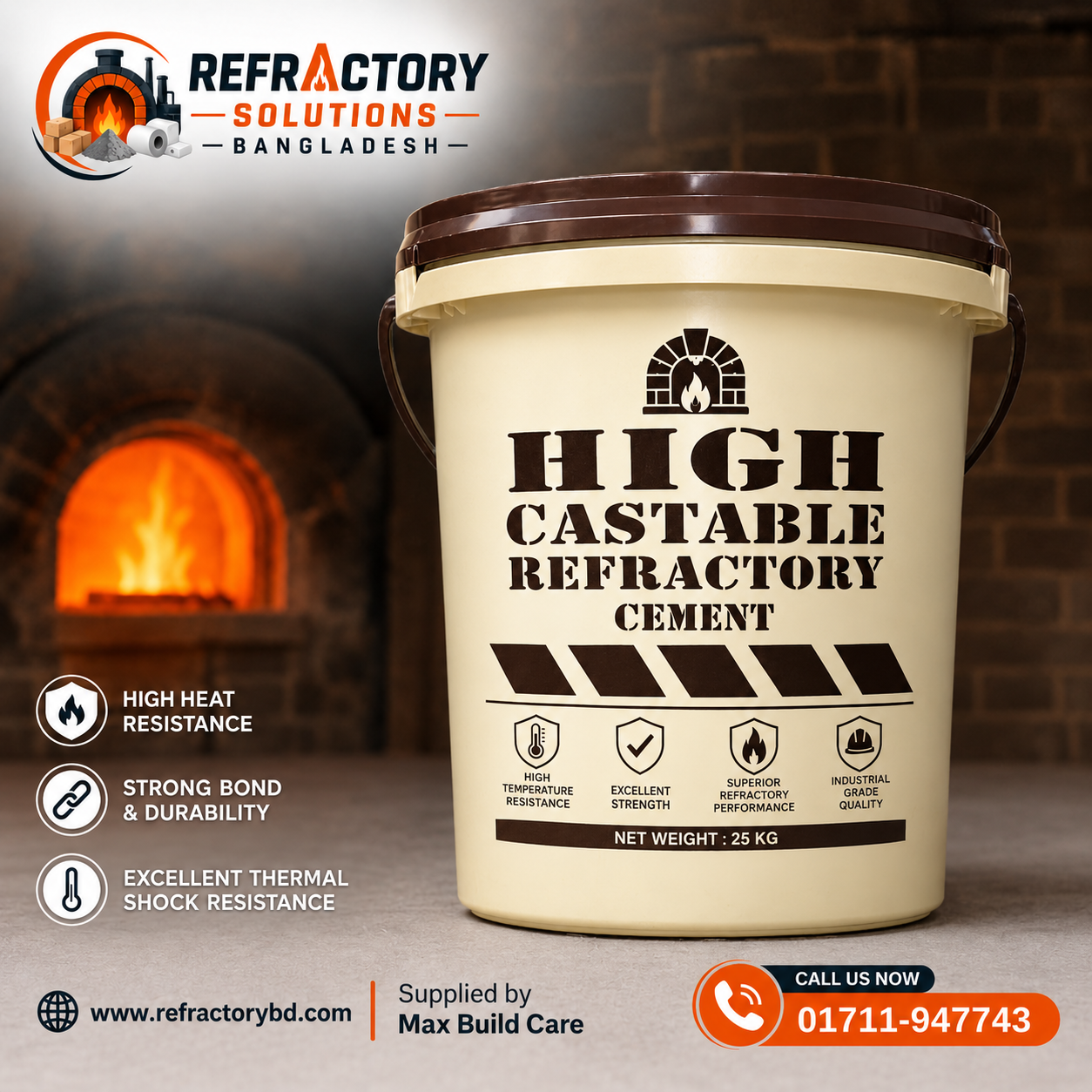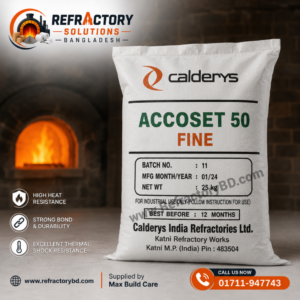
High Castable Refractory Cement is a heat-resistant monolithic refractory material designed for high-temperature construction, furnace lining, kiln repair, oven applications, and industrial refractory maintenance. It provides reliable thermal resistance, structural stability, and durable performance under demanding operating conditions.
High Castable Refractory Cement is a specialized monolithic refractory material designed for high-temperature construction, lining, repair, maintenance, and heat-resistant applications. Unlike conventional Portland cement, refractory cement is developed for environments where the material must withstand elevated temperatures, repeated heating and cooling cycles, and demanding thermal conditions.
Its castable form allows the material to be installed directly at the job site and shaped according to the required geometry. It can be used for constructing or repairing refractory linings, furnace components, kiln sections, ovens, fireplaces, heating chambers, and other thermal equipment. When properly mixed, installed, cured, dried, and heated according to the manufacturer’s recommendations, it can provide a durable and stable refractory structure.
High Castable Refractory Cement is generally supplied as a dry, pre-blended refractory material containing selected refractory aggregates, binders, and performance-enhancing components. The exact composition varies according to the specific grade and manufacturer.
The material is designed to provide a combination of heat resistance, mechanical stability, thermal durability, and reliable refractory performance. Its castable nature makes it particularly useful where conventional refractory bricks are difficult to install or where a monolithic lining is preferred.
It can be applied to new refractory construction as well as maintenance and repair projects.
High Castable Refractory Cement offers several important characteristics for high-temperature applications:
The actual temperature capability, strength, density, porosity, thermal conductivity, and chemical resistance depend on the specific product formulation and should be confirmed from the manufacturer’s Technical Data Sheet.
High Castable Refractory Cement can be used for selected furnace lining and repair applications. It provides a heat-resistant barrier between the high-temperature working zone and the furnace shell or supporting structure.
Kilns operate under continuous or repeated high-temperature conditions. Castable refractory materials can be used for suitable kiln linings, patches, burner areas, hearths, and other refractory components where the selected grade meets the operating requirements.
The material is suitable for selected industrial oven construction and repair applications. It can be used where heat-resistant monolithic construction is required.
Suitable grades of refractory cement can be used in fireplaces, heating chambers, and other heat-exposed structures. The material helps provide a refractory surface capable of handling elevated temperatures.
One of the major advantages of castable refractory cement is its usefulness in repair work. Cracked, eroded, or damaged refractory sections can be removed and rebuilt using an appropriate castable grade.
Proper installation is essential to achieving satisfactory refractory performance. Before application, the surface should be clean, stable, and free from loose refractory material, dust, grease, and other contaminants.
The dry material should be mixed according to the manufacturer’s recommended procedure. The correct amount of mixing liquid should be used because excessive water can negatively affect the final properties of many refractory castables.
The material should be properly placed and compacted to reduce unwanted voids. For complex shapes, suitable molds or forms can be used.
After installation, the refractory should be cured and dried according to the manufacturer’s instructions. Controlled dry-out is particularly important because moisture trapped inside a newly installed refractory lining can generate steam during rapid heating and potentially cause cracking or structural damage.
High Castable Refractory Cement is intended for applications where conventional construction cement would not provide the required thermal performance. Its refractory formulation is designed to maintain useful structural and thermal properties under elevated temperatures.
However, refractory performance depends on more than maximum temperature alone. Factors such as thermal cycling, abrasion, mechanical impact, chemical attack, lining thickness, heating rate, and installation quality must also be considered when selecting a suitable grade.
The principal benefits of High Castable Refractory Cement include:
High Heat Resistance: Designed for demanding heat-exposed environments.
Monolithic Construction: Provides a continuous refractory lining without requiring numerous individual bricks.
Easy Repair: Useful for rebuilding damaged refractory areas and filling irregular sections.
Flexible Application: Can be formed into different shapes using suitable molds and installation methods.
Durable Performance: Properly selected and installed material can provide long-term service in suitable thermal environments.
Industrial Versatility: Applicable to selected furnaces, kilns, ovens, heaters, fireplaces, and other thermal equipment.
High Castable Refractory Cement should be stored in a dry, clean, and protected environment. The bags should remain sealed until use and should be protected from rain, moisture, and excessive humidity.
During mixing and installation, appropriate personal protective equipment should be used. Users should refer to the manufacturer’s Safety Data Sheet for specific handling and safety requirements.
For professional industrial applications, the following technical parameters should be checked before purchase and installation:
These values can vary significantly between refractory grades, so they should not be assumed from the general product name.
High Castable Refractory Cement is a versatile monolithic refractory material designed for high-temperature construction, lining, repair, and maintenance applications. Its castable form makes it suitable for creating continuous refractory structures and repairing irregular or damaged areas where conventional refractory bricks may not be practical.
It can be used in suitable furnaces, kilns, industrial ovens, heating equipment, fireplaces, and other high-temperature systems, provided that the selected grade is compatible with the actual operating conditions.
For reliable performance, proper surface preparation, mixing, placement, curing, controlled drying, and gradual initial heating are essential. The final product selection should always be based on the manufacturer’s current TDS/SDS and the specific temperature, mechanical, chemical, and thermal requirements of the application.