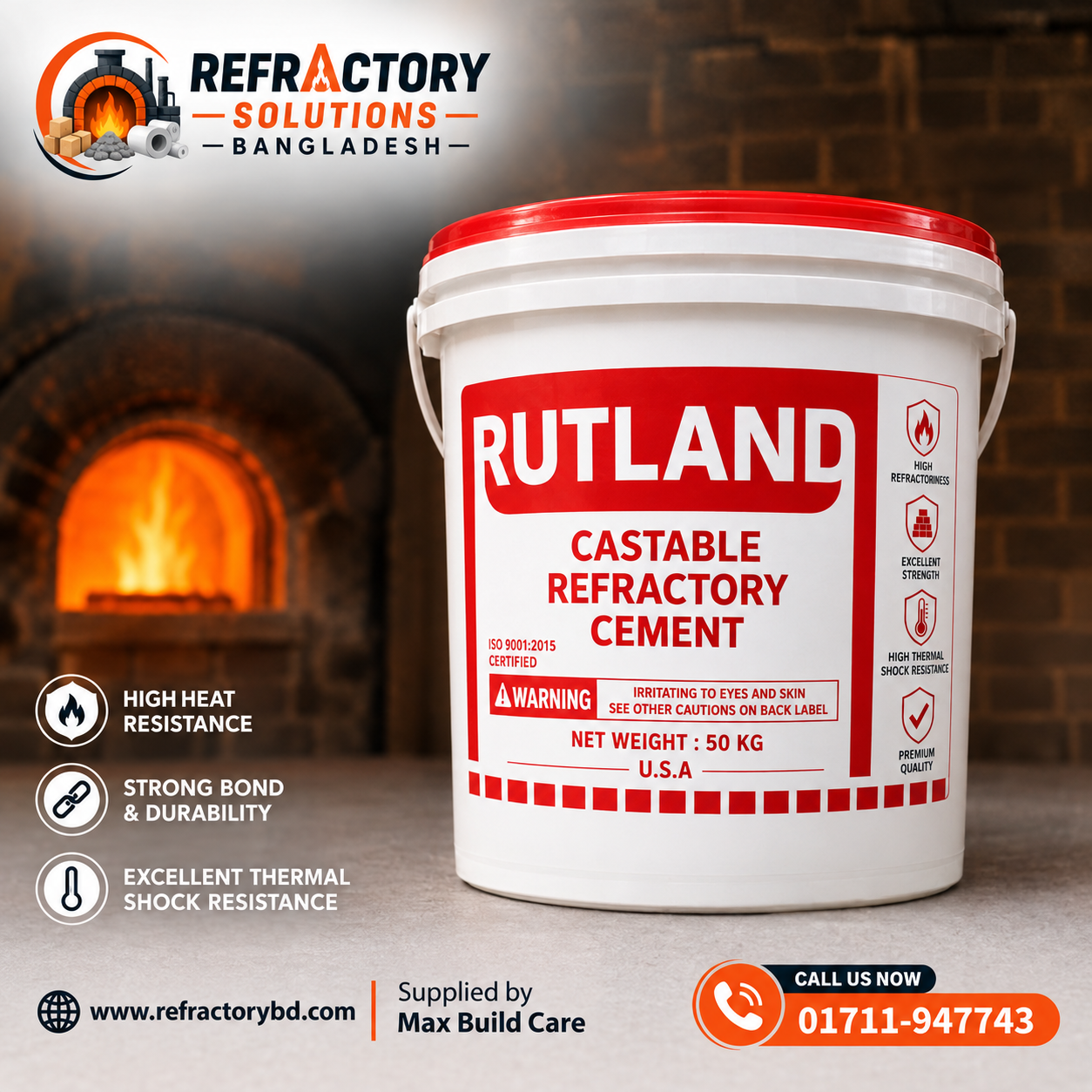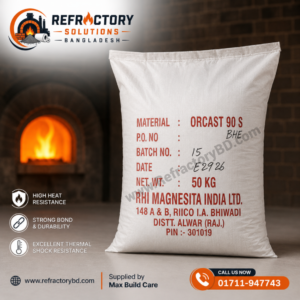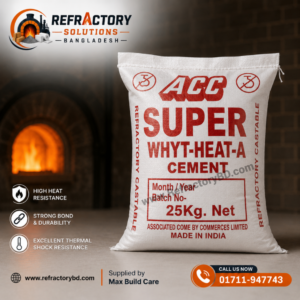
RUTLAND Castable Refractory Cement is a heat-resistant castable material designed for high-temperature construction, repair, and refractory applications. It provides durable performance and strong heat resistance for fireplaces, wood stoves, furnaces, kilns, ovens, and other heat-exposed areas.
RUTLAND Castable Refractory Cement is a specialized heat-resistant refractory material designed for high-temperature construction, repair, patching, and rebuilding applications. It is intended for areas exposed to significant heat where ordinary cement or conventional construction materials may deteriorate. Its castable form makes it suitable for forming, rebuilding, or repairing refractory sections in fireplaces, wood stoves, furnaces, kilns, ovens, and other heat-exposed equipment.
The material is particularly useful for maintenance and refractory repair work because it can be placed into prepared cavities, damaged sections, molds, or forms to create a solid heat-resistant structure. When properly mixed, installed, cured, and gradually dried according to the manufacturer’s instructions, it can provide reliable refractory performance and help extend the service life of heat-exposed structures.
RUTLAND Castable Refractory Cement is designed around the requirements of high-temperature applications. Unlike ordinary cement, refractory cement is formulated specifically for environments where elevated temperatures and repeated heating and cooling can affect the integrity of conventional materials.
Its important characteristics include:
The castable nature of the product allows it to be shaped according to the required application. This makes it useful for repairing irregular areas where prefabricated refractory bricks or components may not provide the required fit.
RUTLAND Castable Refractory Cement can be used for a variety of refractory construction and maintenance applications.
The product can be used for appropriate refractory construction and repair work in fireplaces. It can help rebuild damaged heat-exposed sections and provide a suitable refractory barrier between high-temperature zones and surrounding structures.
Wood-burning equipment experiences repeated heating and cooling cycles. RUTLAND Castable Refractory Cement can be used for suitable repair and refractory construction applications around wood stoves, subject to the manufacturer’s recommendations.
In furnace maintenance, refractory materials are used to protect structural components from direct heat exposure. Castable refractory cement can be used for appropriate furnace repair, patching, and refractory lining applications where its specifications meet the operating conditions.
Kilns require materials capable of withstanding elevated temperatures. The product can be considered for selected kiln repair and construction applications where the manufacturer’s technical specifications are suitable.
The material may also be useful in appropriate oven and heat-processing equipment applications where a heat-resistant refractory material is required.
One of the important uses of castable refractory cement is the repair of damaged refractory surfaces. Thermal cycling, mechanical impact, abrasion, and prolonged heat exposure can cause cracks, erosion, or deterioration in refractory structures.
Before repair, loose and damaged material should be removed to expose a sound and stable surface. The prepared area should then be cleaned properly before application. The refractory cement can be installed into the prepared section according to the manufacturer’s recommended procedure.
Proper preparation is essential for achieving good bonding and long-term performance.
Correct installation plays an important role in the performance of any refractory material. The product should be mixed and applied according to the manufacturer’s instructions, including the recommended water or mixing requirements, consistency, application thickness, compaction, curing, and drying procedure.
For cast applications, appropriate forms or molds can be used to achieve the desired shape. The material should be properly compacted during placement to reduce unwanted voids and ensure good contact with the surrounding refractory structure.
After installation, the material should be allowed to cure properly. Controlled drying and gradual heating are especially important because rapidly exposing newly installed refractory material to high temperatures can cause cracking, steam generation, or other damage.
Refractory cement must maintain its structural integrity under high-temperature conditions. RUTLAND Castable Refractory Cement is designed for heat-resistant construction and repair applications, making it different from ordinary Portland cement used in general building construction.
Actual performance depends on several factors, including installation quality, thickness, curing, dry-out procedure, operating temperature, thermal cycling, mechanical conditions, and the specific application.
Therefore, the manufacturer’s current technical documentation should always be consulted before selecting the product for a particular furnace, kiln, oven, or other thermal application.
RUTLAND Castable Refractory Cement offers several practical advantages for refractory construction and maintenance:
Heat Resistance: Designed specifically for applications exposed to elevated temperatures.
Castable Form: Can be formed and placed into suitable shapes, cavities, and repair areas.
Repair Capability: Useful for rebuilding damaged refractory sections and performing maintenance work.
Versatile Application: Suitable for selected fireplaces, wood stoves, furnaces, kilns, ovens, and other heat-exposed equipment.
Durable Refractory Structure: When correctly installed and cured, the material can provide a durable heat-resistant structure.
Maintenance Friendly: Suitable for applications where damaged refractory areas need to be restored rather than completely rebuilt.
The material should be stored in a clean, dry and protected location. Packaging should remain properly sealed until use and should be protected from moisture and excessive humidity.
During handling and installation, suitable personal protective equipment should be used. Users should also consult the manufacturer’s Safety Data Sheet (SDS) for detailed safety, handling, storage, and disposal information.
Selecting the correct refractory material requires consideration of the actual operating environment. Temperature, thermal cycling, mechanical loading, abrasion, chemical exposure, installation thickness, and curing requirements can all influence refractory performance.
For demanding industrial applications, buyers should verify the product’s current Technical Data Sheet (TDS), Safety Data Sheet (SDS), recommended service temperature, chemical composition, installation procedure, curing requirements, and dry-out schedule before use.
RUTLAND Castable Refractory Cement is a specialized high-temperature refractory material designed for construction, repair, patching, and maintenance applications. Its castable format provides flexibility for rebuilding damaged refractory sections and forming heat-resistant structures in suitable applications.
It can be used for selected fireplaces, wood stoves, furnaces, kilns, ovens, and industrial heat-exposed equipment, provided that the product specifications match the application’s operating conditions. Proper surface preparation, mixing, installation, curing, controlled drying, and gradual heating are essential for achieving reliable long-term performance.
For industrial refractory projects, the final product selection should be based on the manufacturer’s current technical documentation and the actual service conditions of the equipment.