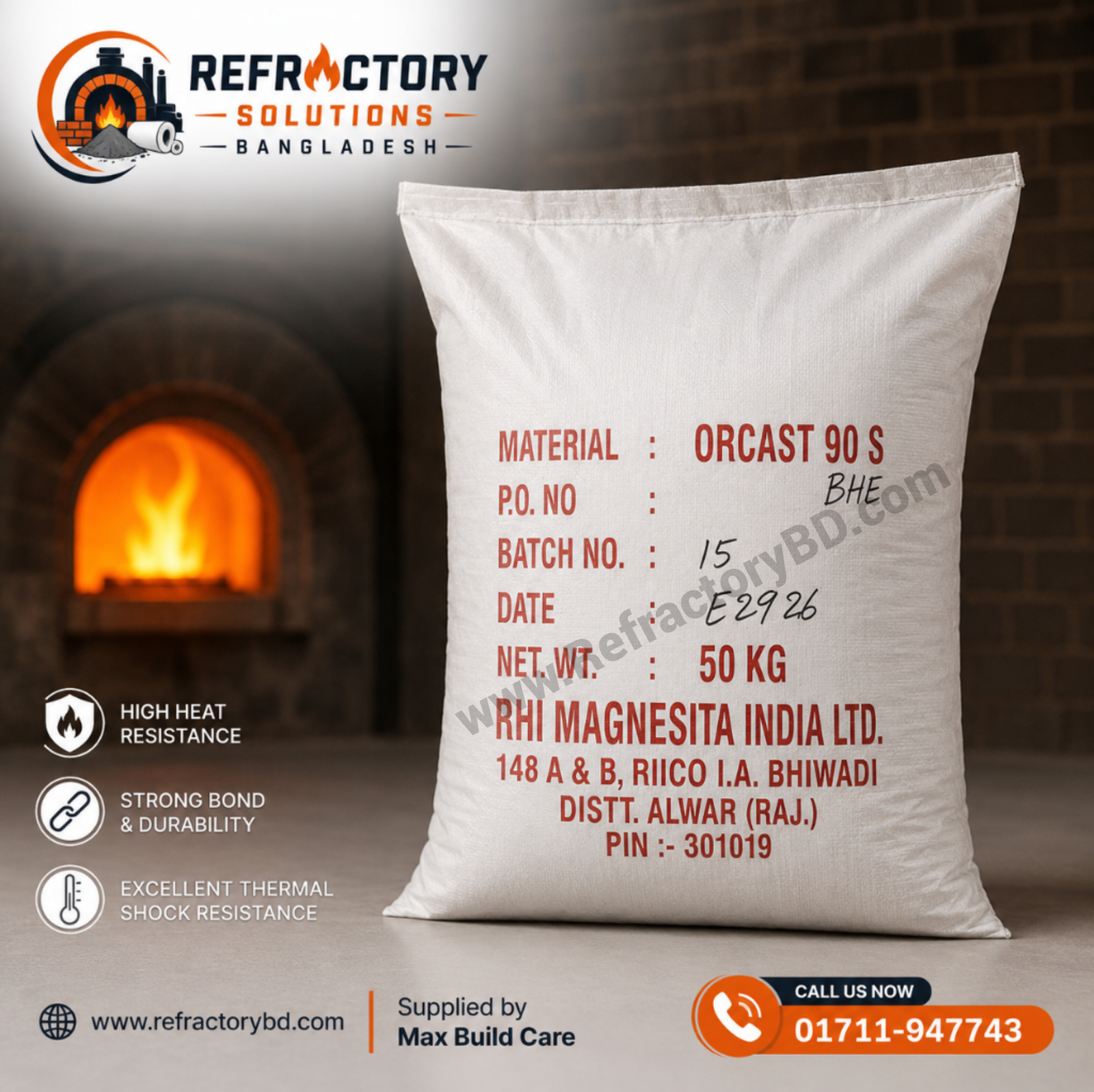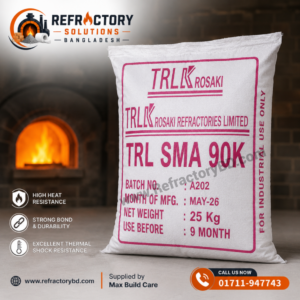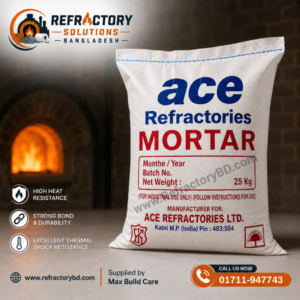
ORCAST 90 S is a high-alumina refractory castable designed for high-temperature industrial applications. It provides excellent thermal stability, mechanical strength, abrasion resistance, and durability, making it suitable for furnaces, kilns, boilers, foundries, steel plants, and other demanding refractory linings.
ORCAST 90 S is a high-performance refractory castable designed for demanding high-temperature industrial applications. As a high-alumina monolithic refractory material, it is suitable for applications where resistance to heat, mechanical stress, abrasion, and repeated thermal cycling is required. It can be considered for furnace linings, kiln linings, boiler systems, foundries, steel and metal-processing facilities, cement plants, and various other industrial thermal-processing equipment.
Unlike conventional refractory bricks, castable refractories are supplied as a dry refractory mixture that can be installed by casting, placing, or other suitable installation techniques. This provides flexibility when constructing complex shapes, repairing damaged refractory areas, or producing monolithic linings.
ORCAST 90 S is designed to provide reliable performance in severe thermal environments. Its high-alumina refractory formulation provides a combination of thermal and mechanical properties required for industrial refractory construction.
Key characteristics may include:
The actual performance and technical values depend on the manufacturer’s formulation and should be verified against the latest technical data sheet.
Industrial furnaces, kilns, boilers, and combustion systems operate under severe temperature conditions. Refractory materials are therefore required to protect equipment structures and maintain the integrity of hot-face linings.
ORCAST 90 S is intended for high-temperature refractory applications where a durable monolithic lining is required. Properly selected and installed refractory castable can provide thermal protection while maintaining structural integrity during service.
The product should always be used within the operating conditions specified by the manufacturer. Correct installation, curing, drying, and controlled heat-up are essential for achieving the expected refractory performance.
Refractory linings can experience mechanical impact, friction, material movement, and abrasion during industrial operation. ORCAST 90 S is designed for applications where resistance to mechanical wear is an important consideration.
A properly installed high-alumina castable can form a dense and durable refractory layer capable of withstanding operational stresses. This makes the material suitable for selected areas of furnaces, kilns, boilers, combustion chambers, and other equipment exposed to both heat and mechanical wear.
ORCAST 90 S can be considered for a wide range of industrial refractory applications, including:
The suitability of the product for a particular application should be confirmed based on operating temperature, chemical environment, mechanical loading, lining thickness, and installation method.
Proper installation is critical to the performance and service life of refractory castables. ORCAST 90 S should be mixed using the water quantity and mixing procedure recommended by the manufacturer. Excessive water addition should be avoided because it can adversely affect density, strength, drying behavior, and overall refractory performance.
Depending on the application, the castable may be installed using suitable casting, vibration, or placing techniques. The refractory surface and supporting structure should be properly prepared before installation.
Following installation, adequate curing and controlled drying are important. Rapid heating of a newly installed castable can cause steam pressure and cracking. Therefore, a controlled dry-out and heat-up procedure should be followed according to the manufacturer’s recommendations.
ORCAST 90 S provides the flexibility of a monolithic refractory system while offering the performance characteristics required for high-temperature service. It can be used for both new refractory construction and maintenance work.
The ability to form continuous refractory linings can be particularly useful in areas where complex shapes, irregular surfaces, or localized repairs make conventional brick installation difficult. Properly designed refractory systems can also help reduce maintenance requirements and support reliable operation of thermal equipment.
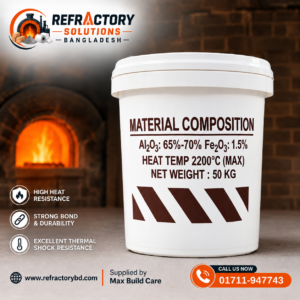
Before purchasing ORCAST 90 S, industrial users should review the manufacturer’s technical specifications. Important parameters may include Al₂O₃ content, SiO₂ content, Fe₂O₃ content, bulk density, cold crushing strength, permanent linear change, porosity, abrasion resistance, water requirement, particle size distribution, and recommended service temperature.
These specifications help determine whether the product is suitable for a specific refractory application.
ORCAST 90 S should be stored in a dry, clean, and protected environment. The packaging should be kept sealed and protected from moisture. Contact with water before the intended mixing process should be avoided.
During handling and installation, appropriate industrial safety procedures and personal protective equipment should be used in accordance with the manufacturer’s safety documentation.
ORCAST 90 S is a high-alumina refractory castable intended for demanding industrial environments where high-temperature resistance, mechanical durability, thermal stability, and abrasion resistance are important. It can be considered for furnaces, kilns, boilers, foundries, cement plants, steel industries, and other thermal-processing applications.
For optimum performance, ORCAST 90 S should be selected according to the actual operating conditions and installed strictly according to the manufacturer’s technical and installation guidelines. Proper mixing, curing, controlled drying, and heat-up procedures are essential for achieving reliable and durable refractory service.