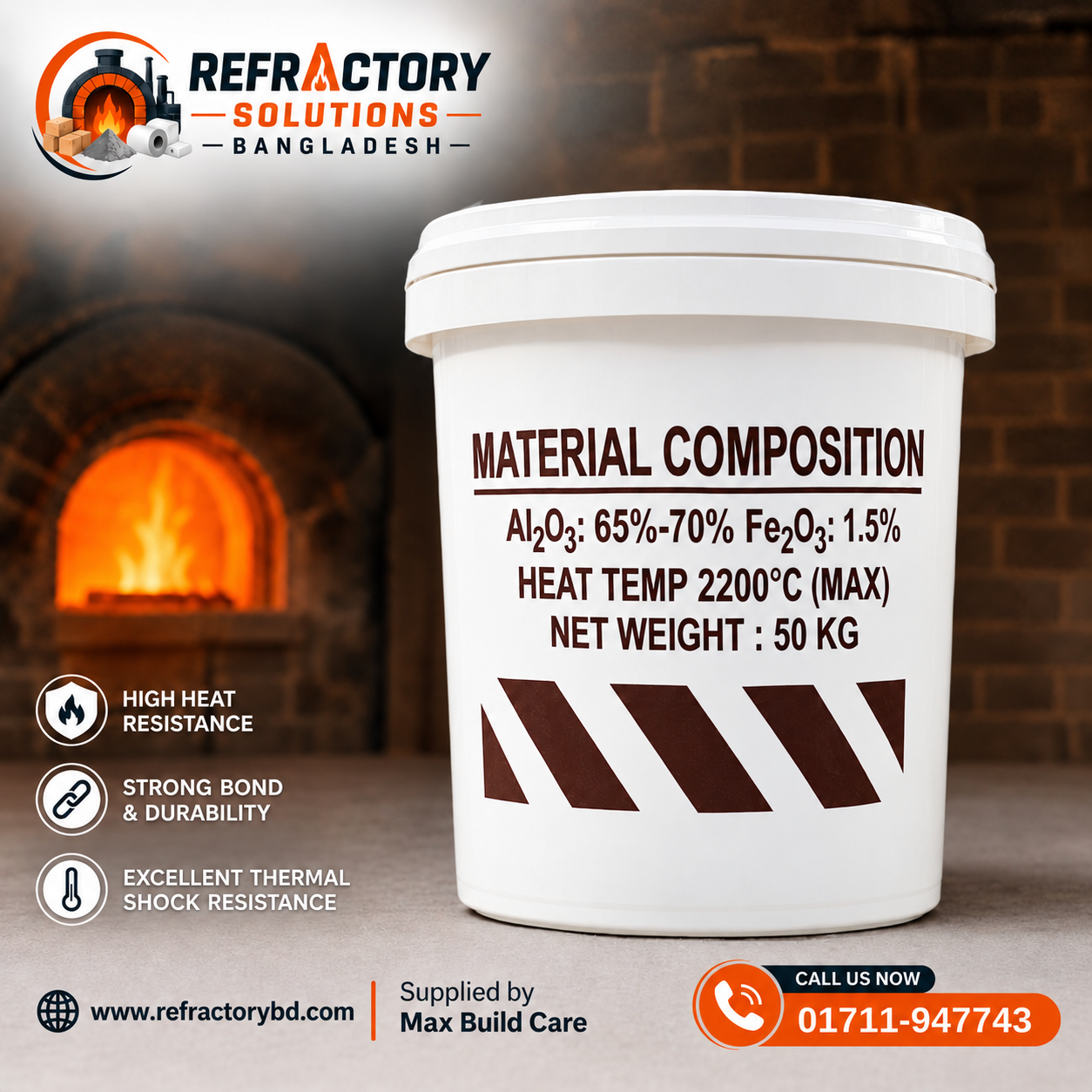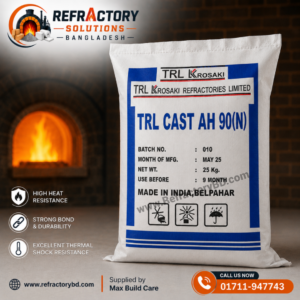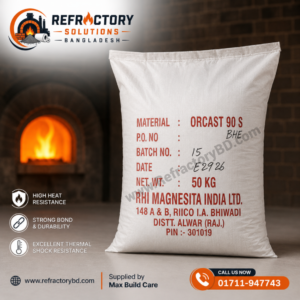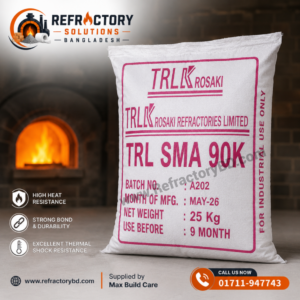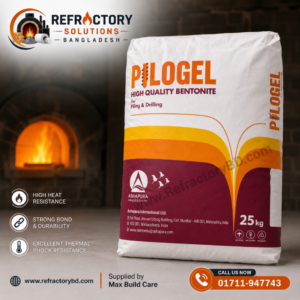
Material Composition: Carefully selected high-quality refractory raw materials formulated to deliver excellent heat resistance, mechanical strength, thermal stability, durability, and reliable performance. Suitable for demanding industrial applications requiring consistent performance under high-temperature operating conditions and prolonged thermal exposure.
Material Composition refers to the chemical and physical components that make up a refractory material and determine its performance under high-temperature industrial conditions. In refractory products, material composition is one of the most important factors influencing refractoriness, thermal stability, mechanical strength, abrasion resistance, chemical resistance, thermal shock resistance, and overall service life.
Refractory materials are generally formulated using carefully selected mineral and inorganic raw materials. Depending on the type and intended application, these materials may contain varying proportions of Alumina (Al₂O₃), Silica (SiO₂), Magnesia (MgO), Calcium Oxide (CaO), Iron Oxide (Fe₂O₃), Chromia (Cr₂O₃), Zirconia (ZrO₂), and other mineral components. The precise composition is selected according to the temperature, atmosphere, mechanical stress, chemical exposure, and operating conditions of the application.
The composition of a refractory product directly influences how it behaves when exposed to extreme temperatures. A properly designed composition helps the refractory maintain its shape, strength, and structural integrity during continuous heating and cooling.
For example, high-alumina refractory materials are generally selected for applications requiring high refractoriness and resistance to severe thermal conditions. Magnesia-based materials are commonly used in environments where basic refractories are required, while silica-based refractories are suitable for particular high-temperature applications.
Therefore, understanding material composition is essential when selecting refractory products for furnaces, kilns, boilers, foundries, cement plants, steel plants, glass industries, and other thermal-processing equipment.
Alumina is one of the most important components in many high-performance refractory materials. Increasing alumina content can contribute to high refractoriness, thermal stability, and resistance to mechanical wear. High-alumina castables, bricks, and monolithic refractories are widely used in demanding industrial applications.
Silica is another major refractory constituent and can be present in the form of quartz, cristobalite, or other silica-bearing raw materials. It contributes to the structure and performance of many refractory formulations. The quantity and form of silica must be carefully controlled because phase transformations can occur during heating.
Magnesia is particularly important in basic refractory systems. It provides high-temperature performance and is commonly associated with refractory applications in steelmaking and other environments where resistance to basic slags is required.
Calcium oxide may be present as a component of refractory binders or mineral raw materials. In castable formulations, calcium-containing binders can contribute to the development of strength during curing and subsequent heating.
Iron oxide can occur naturally in refractory raw materials or be present as a controlled component. Its concentration is often an important quality parameter, particularly for applications where chemical purity and high-temperature performance are critical.
Material composition is not limited to chemical analysis. The particle size distribution of refractory raw materials is also an important part of the overall formulation.
Refractory castables may contain fine powders, intermediate particles, and coarse refractory aggregates. A properly designed particle-size distribution helps improve packing density and can reduce voids within the refractory structure.
The combination of chemical composition and particle distribution allows manufacturers to develop products with specific characteristics such as strength, density, porosity, workability, and thermal performance.
Many monolithic refractories contain a binder system that helps hold the refractory ingredients together. Depending on the product, binders may include hydraulic cement, calcium aluminate cement, chemical binders, or other specialized bonding systems.
The binder influences setting, curing, strength development, and high-temperature behavior. Therefore, binder selection is an important part of refractory material composition.
Special additives may be incorporated into refractory formulations to improve specific properties. Depending on the product, these may help enhance flowability, setting behavior, strength, abrasion resistance, thermal shock resistance, or resistance to chemical attack.
The exact additives and their quantities vary according to the manufacturer’s formulation and intended application.
When evaluating the material composition of a refractory product, several technical parameters should be considered, including:
These parameters provide useful information about the expected performance of a refractory material.
Materials with carefully controlled compositions are used throughout high-temperature industries. Typical applications include steel furnaces, cement kilns, rotary kilns, boilers, foundries, incinerators, glass furnaces, petrochemical units, heat-treatment furnaces, and industrial combustion systems.
Different applications require different refractory compositions. For example, a furnace exposed to severe abrasion may require a dense high-strength composition, while an area requiring thermal insulation may require a lightweight and highly porous refractory structure.
Consistent material composition is essential for maintaining product quality. Refractory manufacturers commonly use chemical analysis, particle-size testing, density measurements, strength testing, and other laboratory procedures to verify raw materials and finished products.
For industrial procurement, the manufacturer’s Technical Data Sheet (TDS), Safety Data Sheet (SDS), Certificate of Analysis (COA), and relevant test standards should be reviewed where applicable.
Material Composition is a fundamental consideration in the selection and performance of refractory products. The balance of alumina, silica, magnesia, calcium oxide, iron oxide, aggregates, binders, additives, and particle sizes determines many of the material’s thermal, mechanical, and chemical characteristics.
Selecting a refractory product based on its actual material composition helps ensure compatibility with the operating environment and can contribute to reliable equipment protection and longer refractory service life. For critical applications, composition should always be evaluated together with operating temperature, chemical atmosphere, mechanical load, thermal cycling, installation method, and the manufacturer’s certified technical specifications.