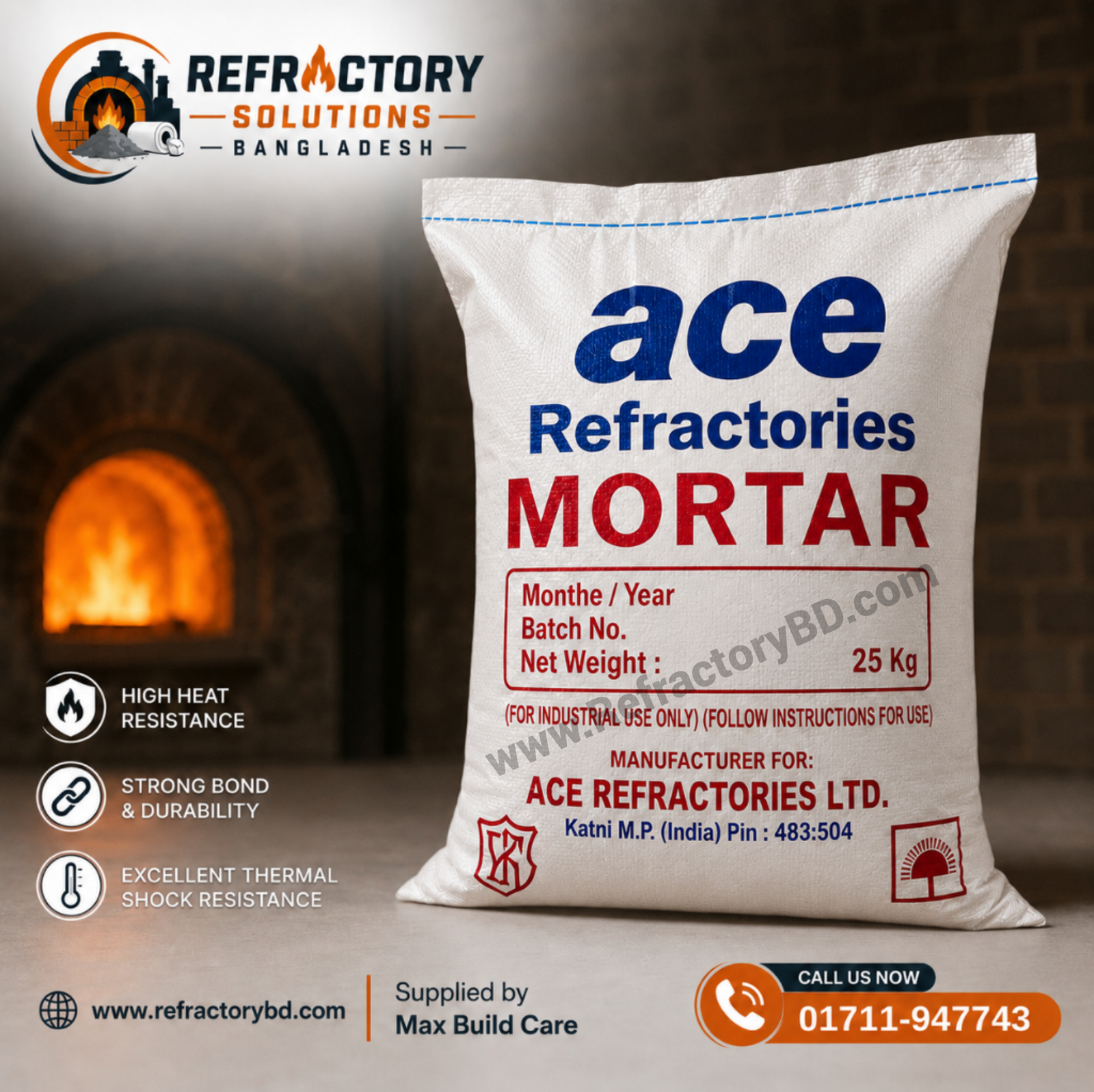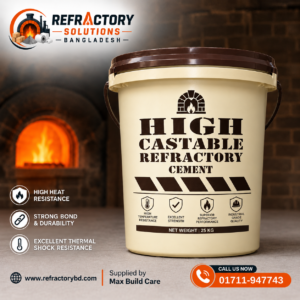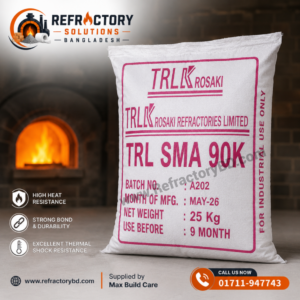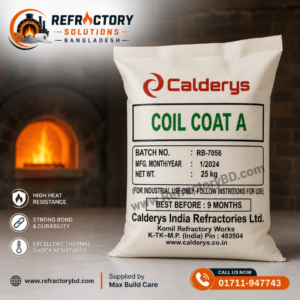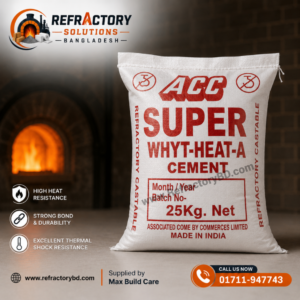
Refractory Mortar is a specially formulated heat-resistant bonding material used for joining, laying, sealing, and repairing refractory bricks and other refractory components in high-temperature environments. It plays an essential role in constructing durable furnace, kiln, boiler, incinerator, fireplace, chimney, and other industrial thermal linings. Unlike conventional cement mortar, refractory mortar is designed to maintain its bonding performance and structural integrity when exposed to elevated temperatures and repeated heating and cooling cycles.
Refractory Mortar is generally manufactured from carefully selected refractory raw materials, fine mineral aggregates, binders, and performance-enhancing additives. Depending on the required application, refractory mortar may be formulated with different levels of alumina, silica, fire clay, and other refractory constituents. The formulation is selected according to the operating temperature, refractory brick type, chemical environment, and installation method.
Typical Composition: Al₂O₃ + SiO₂ + Refractory Additives
Product Type: Heat-Resistant Refractory Mortar
Main Function: Refractory Brick Bonding, Jointing and Sealing
Applications: Furnace, Kiln, Boiler, Fireplace, Chimney and Industrial Thermal Equipment
One of the major advantages of Refractory Mortar is its ability to provide a reliable bond between refractory bricks. Proper bonding helps minimize open joints and prevents hot gases, flames, and heat from penetrating through the refractory lining.
Depending on the specific grade, refractory mortar can offer good adhesion, thermal stability, resistance to thermal cycling, and compatibility with various refractory brick compositions. High-alumina refractory mortars are particularly suitable for demanding applications where higher temperature resistance and chemical stability are required.
The fine particle structure of the mortar also helps achieve smooth and relatively thin joints between refractory bricks. This can improve the overall integrity of the refractory lining and reduce unnecessary heat transfer through oversized mortar joints.
Refractory Mortar is widely used for installing firebricks, high-alumina bricks, silica bricks, insulating firebricks, and other shaped refractory products. It is applied between adjoining bricks to create a continuous and stable refractory structure.
Proper mortar selection is important because the mortar should be compatible with the refractory bricks being installed. Factors such as thermal expansion, chemical composition, service temperature, and operating conditions should be considered before selecting a particular grade.
For professional installation, the manufacturer’s recommended mixing ratio, joint thickness, application method, curing requirements, and dry-out procedure should always be followed.
Refractory Mortar is commonly used in furnace and kiln construction and maintenance. It can be used for brick joints in industrial furnaces, heat-treatment furnaces, rotary kilns, boilers, incinerators, ovens, and other high-temperature equipment.
The mortar helps hold individual refractory bricks together while maintaining the integrity of the lining during thermal operation. In maintenance applications, it can also be used for repairing deteriorated joints, filling suitable gaps, and restoring sections of refractory brickwork.
In addition to heavy industrial applications, suitable grades of Refractory Mortar are used in fireplaces, chimneys, heating chambers, industrial ovens, and similar heat-generating structures. Its heat-resistant properties make it more appropriate than ordinary masonry mortar for areas exposed directly or indirectly to high temperatures.
For applications involving direct flame contact or particularly high operating temperatures, the mortar grade should be selected according to the manufacturer’s technical specifications.
Before application, refractory brick surfaces should be clean and free from excessive dust, oil, loose particles, and other contaminants. The mortar should be prepared according to the manufacturer’s instructions. Depending on the product formulation, it may be supplied as a ready-to-use material or as a dry powder requiring controlled addition of liquid.
The mortar should be applied uniformly to the intended joint surfaces. Excessive mortar thickness should generally be avoided because properly controlled joints can provide better refractory lining performance. After installation, appropriate curing and controlled heating or dry-out may be required before the refractory lining is exposed to full operating temperature.
Refractory Mortar provides several important benefits for high-temperature refractory construction:
Not all refractory mortars have the same performance characteristics. Different grades are designed for different temperatures, refractory materials, and service conditions. Important technical parameters may include Al₂O₃ content, SiO₂ content, Fe₂O₃ content, refractoriness, bonding strength, bulk density, particle size, setting characteristics, thermal expansion, and maximum service temperature.
Therefore, the appropriate grade should be selected based on the actual application and manufacturer’s TDS (Technical Data Sheet) or COA (Certificate of Analysis). Exact chemical composition and temperature ratings should not be assumed without product-specific technical documentation.
Refractory Mortar should be stored in a dry, clean, and well-ventilated area away from moisture and direct environmental exposure. Bags or containers should remain properly sealed until use. Proper storage helps maintain the material’s consistency and application performance.
Refractory Mortar is an essential material for the construction, installation, sealing, and maintenance of high-temperature refractory linings. Its primary role is to create a strong and thermally stable bond between refractory bricks while helping maintain the continuity and integrity of the lining. With appropriate grade selection and correct installation practices, Refractory Mortar can contribute to reliable performance in furnaces, kilns, boilers, ovens, fireplaces, chimneys, and various industrial thermal systems.
For website classification:
Category: MONOLITHIC REFRACTORIES → REFRACTORY MORTARS
Product Name: Refractory Mortar